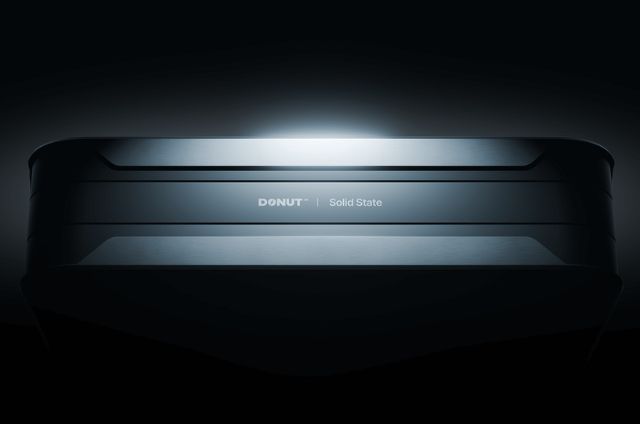
Solid-state batteries have long promised a breakthrough. Now, Finland’s Donut Lab says it has proof. The startup just released its first independent test results — and the charging speeds are turning heads.
According to the data, the battery can charge from 0 to 80 percent in as little as 4.5 minutes.
Independent Testing Confirms Ultra-Fast Charging
The test was conducted by the VTT Technical Research Centre of Finland, a state-owned research organization. VTT evaluated charging speed and thermal behavior under controlled conditions.
Results show impressive performance. In several tests, the battery charged from 0–80% in about 9.5 minutes while retaining 100% of its capacity. In more aggressive tests, it reached 80% in roughly 4.5 minutes and maintained 99% capacity.
That level of retention stands out. Typically, extreme fast charging degrades battery chemistry and reduces long-term performance. However, Donut Lab’s pack handled rapid charging without significant loss.
Why Solid-State Changes the Game
Most EVs today rely on traditional lithium-ion batteries with liquid electrolytes. While proven, those “wet” batteries have limits. They can charge slowly. They also carry flammable materials and may struggle in very cold temperatures.
Solid-state batteries use a dry, solid electrolyte instead. As a result, they can store more energy in the same space. They also improve thermal stability and reduce fire risk.
For years, engineers have called solid-state the “holy grail” of EV batteries. However, scaling production and managing material challenges have delayed commercialization.
A Step Toward Production?
Donut Lab previously claimed it was close to production-ready technology. These independent results strengthen that claim. Fast charging, stable thermal behavior, and strong capacity retention all signal real progress.
Of course, large-scale manufacturing remains the next milestone. Yet, this first test suggests that ultra-fast charging without severe degradation may finally move from theory to reality.
If these results translate to commercial vehicles, EV charging could soon feel closer to refueling — measured in minutes, not coffee breaks.