A New Idea Gains Serious Momentum
A Singapore-based startup is pushing battery innovation in an unexpected direction. Flint has introduced a compostable, cellulose-based battery designed to reduce toxicity, cost, and supply-chain strain. It won’t turn your EV into a stack of paper—but it brings battery chemistry closer to nature than ever before.
The concept arrives at the right time. Automakers want cleaner materials. Regulators want safer batteries. And the industry wants alternatives to lithium-heavy designs.
Why Cellulose Matters
Cellulose forms the backbone of plant cell walls. Researchers have studied it for years as a battery material. Interest kept growing. Now it’s accelerating.
Cellulose helps block dendrites. Those microscopic growths damage lithium-ion batteries over time. It also replaces petrochemical separators with renewable fibers. Studies published in 2025 confirmed that cellulose derivatives can boost safety while lowering environmental impact.
In short, performance and sustainability can coexist.
Flint’s Approach Breaks From Tradition
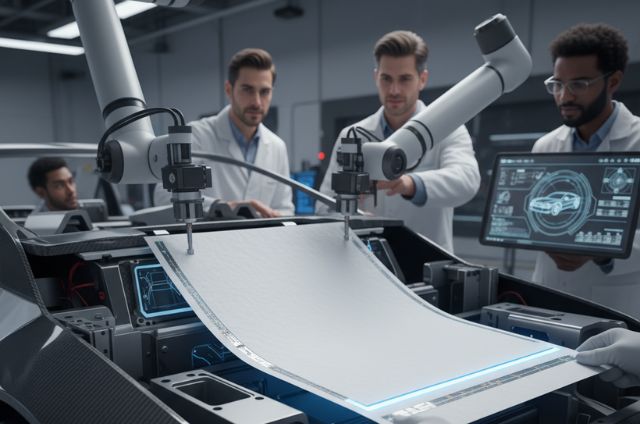
Flint claims its battery avoids lithium and bio-enzymes entirely. Instead, cellulose acts as the ion-transfer medium between the anode and cathode. The result is a rechargeable battery that stays flexible, fire-resistant, and easier to shape.
Cost matters too. Flint says its batteries are 1.8 times cheaper per kWh than lithium-ion units. With scale, it targets below $50 per kWh. If proven, that number would turn heads across the EV sector.
Durability remains central. Flint states that lifespan matches conventional batteries while improving safety and recyclability.
From Startup to Factory Floor
Momentum built fast. After debuting at TechCrunch in late 2023, Flint raised $2 million in seed funding by the end of 2024. Backers span nine countries, with support from accelerators linked to Shell and OPPO.
In 2025, Flint earned a Best of CES Sustainability Award at CES 2025. It also opened an 8,000+ sq. ft. production facility in Singapore, now producing batteries at volume for pilot programs.
What Comes Next
Early customers include Logitech and Amazon, focusing on handheld electronics. EV use will take longer. Still, interest grows. Researchers and startups like WH-Power now explore plant-based separators for safer, fast-charging batteries.
If cellulose scales, the future battery may look less industrial—and far more sustainable.