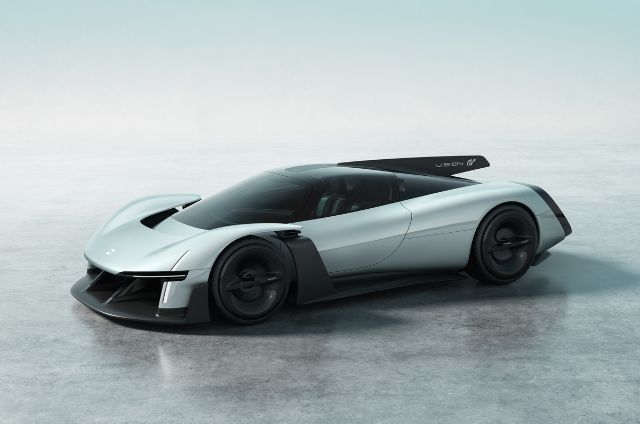
Xiaomi has revealed the Vision Gran Turismo electric hypercar concept at MWC Barcelona 2026, offering a glimpse of how the technology company imagines the future of high-performance EVs.
The project was developed for the iconic Gran Turismo racing franchise, a program that invites select manufacturers to design extreme concept cars for the game. Xiaomi’s entry marks a milestone: it is the first technology company ever invited to join the Vision Gran Turismo lineup, previously dominated by traditional automakers.
While the vehicle will appear virtually in Gran Turismo 7, the concept also highlights Xiaomi’s growing ambitions in the electric vehicle industry.
Aerodynamics as the Core Design Idea
Xiaomi’s design team approached the car with a central challenge: balancing speed-oriented aerodynamics with cornering stability.
Instead of focusing purely on drag reduction or downforce, engineers aimed to optimize overall aerodynamic efficiency. The body shape reflects that goal. A teardrop-inspired cockpit sits within sculpted airflow channels that guide air across the vehicle and release it through large rear outlets.
The result is a concept hypercar that uses the body itself to manage airflow rather than relying on oversized wings or spoilers.
Active Airflow Control
At the rear of the vehicle, Xiaomi introduced an unusual feature called Active Wake Control.
Small perforations surrounding the rear lighting structure channel air dynamically. Sensors monitor vehicle speed and orientation, then adjust airflow patterns to reduce turbulence behind the car.
This solution replaces traditional moving aerodynamic elements while preserving a smooth exterior design.
Stationary Wheel Covers
Another distinctive engineering detail appears in the wheels.
The Vision GT uses vortex-shaped covers positioned flush with the tires. A magnetic system keeps the covers motionless while the wheels rotate underneath.
Spinning wheels normally create aerodynamic drag. By stabilizing the covers, Xiaomi reduces turbulence while improving brake cooling through internal turbine-style airflow channels.
The effect also creates a striking visual illusion of floating wheels.
A Different Kind of Hypercar Interior
Inside, Xiaomi rejected the aggressive racing layout typical of hypercars.
Instead, the cabin follows what the company calls a “Sofa Racer” philosophy. Seats, dashboard, and door panels connect into a continuous circular structure that surrounds the driver.
Materials emphasize comfort as well as performance. The seats use 3D-knitted fabric technology inspired by athletic wear, designed to provide both breathability and support.
Digital systems dominate the cockpit. Xiaomi Pulse, an AI assistant integrated into the dashboard, monitors the environment and driver status. Meanwhile, HyperVision displays adapt the interface depending on driving conditions.
More Than a Game Concept
The Vision Gran Turismo concept will eventually become drivable inside Gran Turismo 7.
However, its importance goes beyond gaming. Xiaomi is expanding rapidly in the EV sector with models like the SU7, while preparing for international expansion in the coming years.
By participating in the Vision Gran Turismo program alongside legendary automotive brands, Xiaomi signals that it wants to compete not just as a tech company—but as a serious force in the future of electric mobility.