Kia Focuses on Cabin Comfort in Its Smallest EV
Kia is pushing refinement in the compact electric segment with the new EV2. The small electric SUV was designed and engineered in Europe specifically for regional roads and driving conditions. However, Kia did not just focus on range or performance. Instead, engineers placed Noise, Vibration, and Harshness (NVH) at the core of the vehicle’s development.
Because electric cars operate quietly, passengers can notice road and wind noise more easily. Therefore, Kia aimed to create a cabin environment that feels calm and composed even during highway driving.
The result is a compact EV that prioritizes acoustic comfort and everyday usability.
Why EVs Need Better Noise Control
Electric vehicles remove the sound of a combustion engine. Consequently, smaller sounds become more noticeable inside the cabin. Road noise, airflow, and even high-frequency electronic components can affect how refined a vehicle feels.
To address this challenge, Kia engineers analyzed how different sounds travel through the vehicle. Then they introduced targeted solutions to reduce unwanted noise before it reaches passengers.
This strategy allows the EV2 to maintain a stable and quiet atmosphere, even on rough roads or at higher speeds.
Smart Engineering Keeps the Cabin Quiet
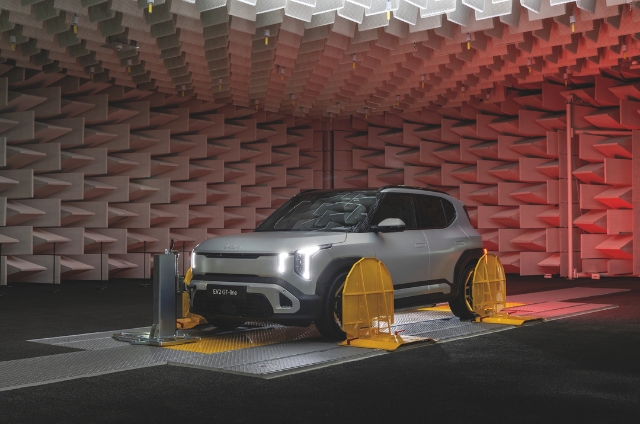
Engineers used advanced simulations and laboratory testing during the development process. Digital models helped identify potential noise sources early in the design phase. Later, dyno-based testing allowed engineers to measure sound levels in controlled conditions.
As a result, Kia introduced several features to reduce noise:
- Acoustic tyres designed to limit road sound
- Acoustic laminated glass in the doors and windscreen
- Wheel-arch absorbers and special carpets to damp vibrations
Together, these components reduce both road and wind noise. The improvements become particularly noticeable during motorway driving.
Managing EV-Specific Sounds
Electric powertrains produce different sounds than traditional engines. Components such as inverters and DC/DC converters can create high-frequency tones.
To reduce these sounds, Kia developed a dedicated insulation system. Additional dash insulation, a front trunk sound absorber, and an optimized underbody cover help block unwanted frequencies.
Meanwhile, the pedestrian warning sound and the alert for Intelligent Speed Limit Assist were carefully tuned. These signals remain clear for safety, yet they avoid becoming irritating during daily driving.
Compact EV With Practical Features
Beyond refinement, the EV2 also targets accessibility. Kia plans two battery options: 42.2 kWh and 61 kWh, with estimated ranges of up to 453 km (WLTP).
The model also supports 400-volt fast charging, AC charging up to 22 kW, and features such as EV route planning, Plug & Charge, and bidirectional charging.
Inside, drivers will find triple digital displays, over-the-air updates, and advanced driver assistance systems. Combined with flexible rear seating and 362 litres of cargo space, the EV2 aims to deliver practicality alongside comfort.
With its focus on quietness and everyday usability, Kia’s EV2 shows how compact EVs can evolve beyond simple city transportation.