China’s electric vehicle startups are hitting a major milestone. Several young EV brands are no longer losing money—they’re becoming profitable. Meanwhile, many Western automakers are still spending billions to transition to electric mobility.
This shift highlights how quickly China’s EV industry is maturing.
Chinese EV Startups Report First Profits
Several Chinese EV companies recently reported their first profitable periods.
Leapmotor, backed by Stellantis, announced its first full-year profit in 2025. The company posted about $78 million in earnings, a dramatic turnaround from a $410 million loss the previous year.
Nio also reported progress. The automaker recorded $104 million in adjusted net profit in the fourth quarter, compared with a loss of nearly $900 million a year earlier.
Xpeng joined the list as well. The company delivered around $55 million in net profit in Q4, reversing a loss of about $190 million during the same period the year before.
These startups now stand alongside profitable Chinese EV leaders like BYD, Li Auto and Xiaomi.
Western Automakers Still Struggle With EV Costs
While Chinese EV brands reach profitability, most Western rivals continue to face financial pressure.
Tesla remains the only profitable pure-play EV manufacturer in the West, although its profits have recently declined as the company shifts focus toward artificial intelligence and robotics.
Traditional automakers such as Ford, General Motors and Stellantis reported multi-billion-dollar losses tied to EV investments last year.
European carmakers continue expanding their electric lineups, but they also face rising costs. Companies like BMW, Volkswagen, Mercedes-Benz and Volvo are still investing heavily in new EV platforms, improved software and faster charging technology.
Vertical Integration Gives China a Cost Advantage
China’s EV makers benefit from strong structural advantages.
Government support played a role. Reports estimate China spent roughly $230 billion supporting its EV industry between 2009 and 2023.
However, subsidies tell only part of the story. Many Chinese automakers control large parts of their supply chains.
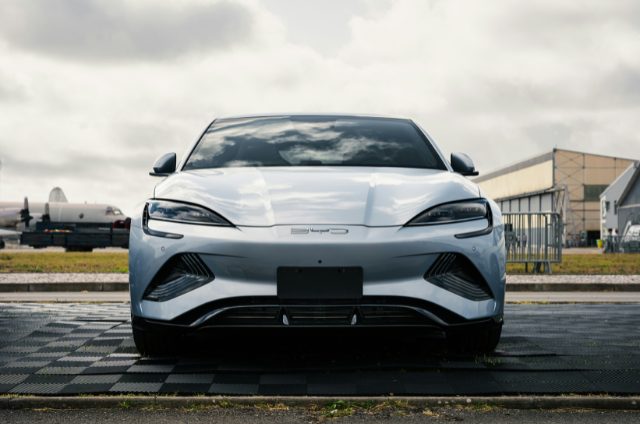
BYD is a prime example. The company manufactures about 75% of its EV components internally, including batteries, motors and software. This approach significantly lowers costs and speeds up development.
China also dominates the global battery supply chain, which remains the most expensive part of electric vehicles.
Global Expansion Is Already Underway
Chinese EV brands are not just succeeding domestically—they are expanding globally.
Leapmotor now sells vehicles in around 40 countries after entering Europe using Stellantis’ dealership network.
Meanwhile, Xiaomi shocked the industry by launching its first EV, the SU7 sedan, in 2024. Within less than two years, the tech giant sold over 380,000 units and quickly reached profitability in its EV business.
As Chinese automakers scale production and expand overseas, competition in the global EV market is intensifying.
Industry analysts warn that automakers who delay the transition to electric vehicles risk falling further behind.