Lexus jumps into 3-row electric SUV segment
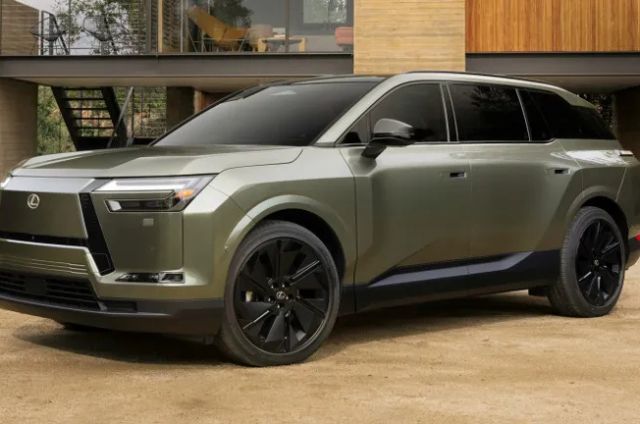
Lexus has officially unveiled the 2027 TZ, its first fully electric three-row SUV. It enters a fast-growing segment dominated by vehicles like the Hyundai IONIQ 9, Volvo EX90, and Rivian R1S, positioning itself as a luxury alternative built on Toyota’s TNGA platform.
The TZ will be offered with two battery options—76.96 kWh and 95.82 kWh—and delivers up to 300 miles of driving range. While not class-leading, it places the SUV firmly in the competitive mainstream range for family-sized EVs.
Power comes from Lexus’ DIRECT4 all-wheel-drive system, standard across all trims. The setup dynamically distributes torque between axles for improved stability, cornering, and acceleration, producing up to 420 horsepower. Towing capacity is rated at 3,500 lbs, slightly behind some rivals like the Hyundai IONIQ 9.
Comfort-focused interior with luxury upgrades
Inside, Lexus leans heavily into comfort with its new “Driving Lounge” concept. The cabin is designed to feel more like a high-end living space than a traditional SUV interior, emphasizing quietness, seating comfort, and premium materials.
The front passenger and second-row captain’s chairs include heating, ventilation, and power ottomans. Lexus also enables full seat folding for expanded cargo space, allowing the interior to switch between passenger luxury and utility mode.
A 21-speaker Mark Levinson sound system anchors the premium experience, while added insulation and structural reinforcement make the TZ the quietest Lexus SUV to date.
Tech upgrades, but no autonomy leap
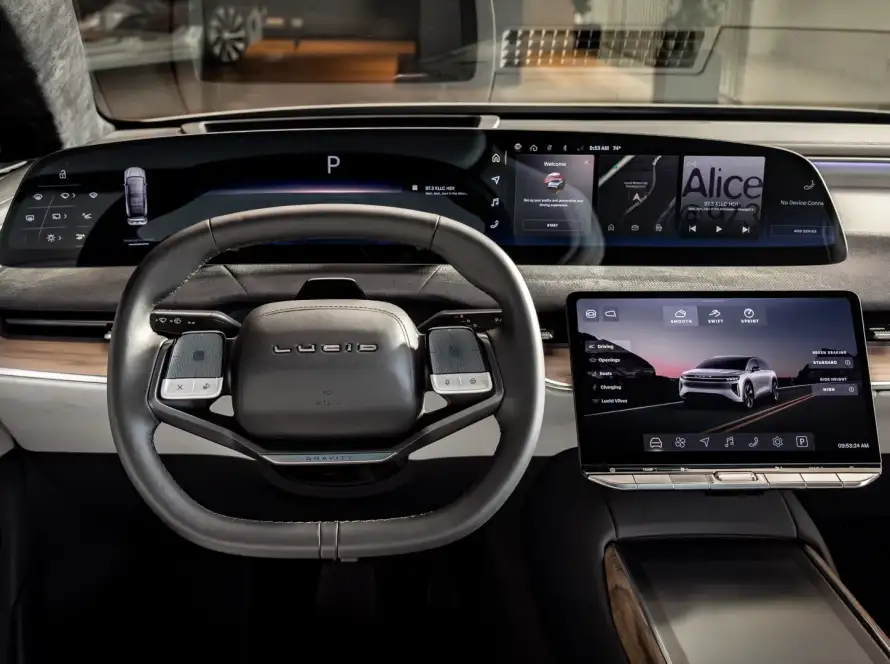
The TZ introduces the latest Lexus Interface system with customizable widgets, improved voice control via “Hey Lexus,” and full-screen navigation across the digital cluster. EV-specific features like charging routing and range mapping are also included.
Driver assistance comes from Lexus Safety System+ 4.0, offering features such as lane change assist, pedestrian detection, and emergency steering support. However, unlike some competitors, the TZ does not push into advanced autonomous driving capabilities.
Charging performance lags behind rivals
Charging is one of the weaker points. The TZ supports DC fast charging up to 150 kW, allowing a 10–80% charge in around 35 minutes. While acceptable, this is significantly slower than newer EV platforms pushing higher-voltage architectures.
The SUV also uses a NACS port for access to Tesla Superchargers and includes a dual-inlet charging setup for both AC and DC charging in a single port design.
The missing piece
Despite its luxury positioning, the biggest surprise is what the TZ doesn’t include: a front trunk. In a segment where competitors increasingly use front storage space for practicality, the absence stands out—especially for a vehicle marketed as a premium family EV.
It’s a small omission, but one that highlights a broader issue: while Lexus focuses heavily on comfort and refinement, it may be falling slightly behind on modern EV packaging efficiency.
Bigger picture
Set to launch by the end of 2026 with pricing expected around $60,000, the Lexus TZ enters the market as a comfortable, well-equipped three-row EV—but not necessarily the most advanced.
It competes strongly on luxury and ride comfort, but range, charging speed, and packaging leave room for rivals to push ahead.