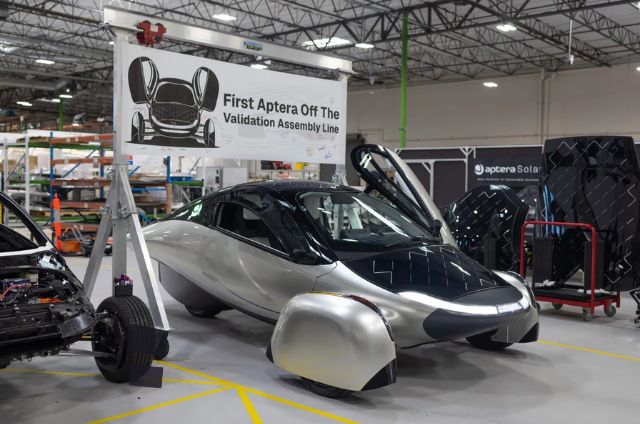
Aptera Motors has reached an important milestone on its path to production. The company has now built its first vehicle using its new validation assembly process, marking a shift from experimental prototypes toward a structured manufacturing workflow.
Until now, most Aptera vehicles were hand-built for engineering development. This new step introduces a repeatable production method designed to test how vehicles will actually be assembled at scale. As a result, the company moves closer to certification, testing completion, and eventual customer deliveries.
A New Phase in Manufacturing
Aptera’s validation assembly line is organized into 14 dedicated stations. At each stage, technicians install specific components and verify system integration before the vehicle moves to the next position.
This process allows engineers to analyze the entire build sequence. They can measure installation times, confirm component alignment, and identify areas where assembly can improve. In addition, the system helps refine station layouts and optimize workflows.
Compared with earlier prototype builds, this structured approach delivers far more consistent results. Consequently, the team gains clearer insight into how full-scale production will operate.
Vehicles Built for Testing
The early vehicles produced on this line are not meant for customers. Instead, they serve as critical tools for engineering validation and regulatory preparation.
These units will undergo temperature testing, braking performance checks, and structural stress evaluations. Some vehicles may even be intentionally pushed to failure during destructive testing to confirm durability and safety standards.
The collected data will support regulatory approvals, including EPA certification and other compliance requirements needed before Aptera can begin selling vehicles.
Preparing for Higher-Volume Production
The milestone also reflects a broader shift within the company. Aptera has expanded hiring across assembly and integration teams, making manufacturing its largest operational department.
With the validation line now active, additional vehicles will be produced in the coming weeks. Each build will contribute to refining assembly methods and verifying production readiness.
Strong Demand for Aptera’s Solar EV
Interest in Aptera’s solar-powered vehicle remains strong. The company reports nearly 50,000 reservations, representing more than $2 billion in potential revenue.
That demand highlights the appeal of Aptera’s ultra-efficient solar electric vehicle, designed to consume minimal energy while gaining additional range directly from sunlight.
For Aptera, activating the validation assembly process represents more than a manufacturing update. It marks a crucial step toward transforming a radical solar EV concept into a production-ready vehicle.