Two EV Prototypes, One National Vision
Canada just doubled down on its EV ambitions.
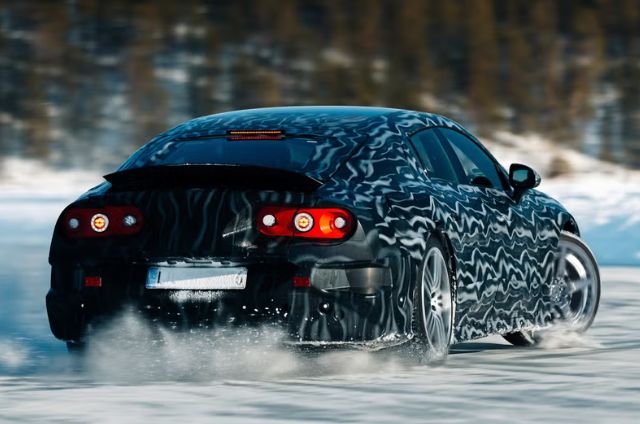
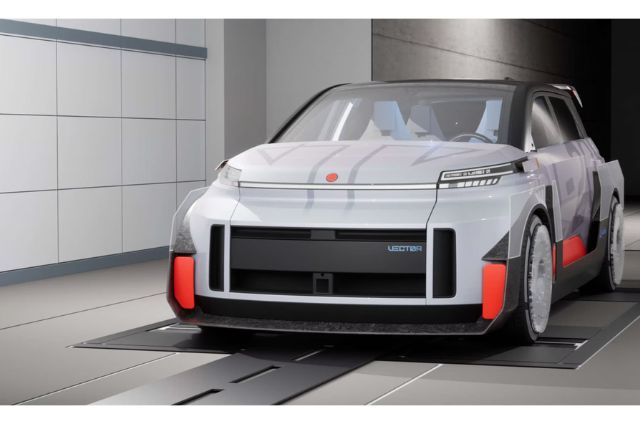
At the 2026 Canadian International AutoShow in Toronto, the Automotive Parts Manufacturers’ Association (APMA) revealed two new Project Arrow prototypes: Vector and Borealis. Together, they signal the next phase of Canada’s homegrown zero-emissions vehicle program.
Project Arrow first debuted in 2023 as Canada’s fully domestic EV concept. Now, Phase 2.0 shifts from proof of concept to scalable platforms built for 2030 and beyond.
Vector Targets the 2030 Market
Vector focuses on near-term commercialization. It showcases Canadian technologies designed for real-world deployment later this decade.
The prototype features an AI-formed, 3D-printed lightweight chassis made from polymer and aluminum. It delivers 650 horsepower through a fully electric powertrain. APMA estimates a driving range of up to 550 kilometers.
In addition, Vector integrates Level 3 autonomous functionality. That means the system can manage driving tasks under certain conditions, while the driver remains ready to intervene.
Simply put, Vector aims to prove Canada can scale advanced EV technology competitively.
Borealis Looks Toward 2040
While Vector focuses on 2030, Borealis explores the longer horizon.
This prototype acts as a research and design platform for future mobility systems. It envisions Level 5 autonomy, where the vehicle handles all driving tasks without human input. It also integrates smart city connectivity and infrastructure-linked systems.
Borealis uses an AI-designed, 3D-printed metal-alloy chassis and powertrain. APMA projects a potential driving range of up to 1,500 kilometers.
These specs remain forward-looking. However, they define Canada’s mobility aspirations for the 2040 era.
Built by a National Network
Ontario Tech University leads engineering integration and prototype assembly. Meanwhile, more than 80 Canadian suppliers and partners contribute technologies and materials.
FedDev Ontario and the Ontario Vehicle Innovation Network provide strategic funding support.
APMA President Flavio Volpe says Phase 2.0 strengthens Canada’s industrial and technological capabilities for the decades ahead.
Project Arrow started as a bold statement. With Vector and Borealis, it now becomes a roadmap.