A Chinese Giant Looks West
China is now the world’s largest auto exporter, with brands ready to compete on price, design, and tech. Yet, Chinese automakers remain almost entirely absent from U.S. showrooms. One major player, Geely, is pushing to change that.
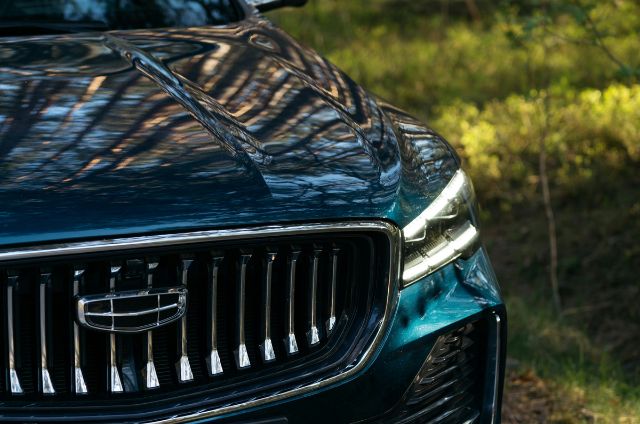
Geely owns Volvo and Polestar—two brands already selling EVs in the U.S. Its South Carolina plant, which assembles the Volvo EX90 and Polestar 3, offers a legal path to local production. Soon, the XC60 will join that production line.
For Geely, it’s a potential backdoor into the U.S. market. But there’s a catch—and it’s a big one.
The Software Firewall
A rule introduced by the U.S. Commerce Department in 2025 has created a steep hurdle. Any automaker from a “country of concern”—like China—must certify that no part of its software or connected systems is developed or controlled by that country.
This includes everything from self-driving algorithms to navigation data, infotainment, and vehicle telematics. It’s a sweeping requirement, aimed at national security concerns, and applies to all Chinese firms—even those building cars on U.S. soil.
Geely, despite building locally through Volvo, still falls under this scrutiny.
A Political Tightrope
The regulation began under the Biden administration and was finalized under Trump’s second term. It reflects rare bipartisan agreement: Chinese software in U.S. vehicles is seen as a red flag.
That puts Geely in a tough spot. Its hardware may be welcome—but its code is not.
Can Geely Adapt or Exit?
Geely’s global ambitions are clear. But without full compliance, its U.S. expansion could stall before it begins. The race to American roads may not be about how fast it builds—but how cleanly it codes.
The Bigger Battle Is Over Data
Geely’s challenge isn’t just about selling cars—it’s about who controls the code behind them. As vehicles become rolling computers, access to data, software control, and AI decision-making are now as tightly guarded as trade secrets. The U.S. isn’t just regulating vehicles—it’s drawing digital borders. For global automakers, cracking the American market now means passing a cybersecurity test first.