Polestar just made home charging cheaper—and smarter. With expanded grid rewards and new car-controlled smart charging, drivers in key European markets can now cut electricity costs by up to €300 per year.
Here’s what it means for Polestar owners.
Grid Rewards Expand to Germany and France
Polestar Energy now includes grid rewards in Germany and France, in partnership with Octopus Energy.
The idea is simple. Drivers allow their cars to charge when the grid needs support. In return, they receive financial rewards.
In Germany, customers using Polestar Energy with an Intelligent Octopus contract can save up to 50% per home charging session. That adds up to as much as €300 annually, depending on usage.
As energy prices remain volatile, these savings matter. At the same time, drivers help stabilise local grids. It’s a win-win.
No Special Charger? No Problem.
Polestar also introduced car-controlled smart charging for Polestar 2 and Polestar 4.
Now, the vehicle itself manages charging times. It responds to energy price signals, grid conditions, and household demand. As a result, drivers no longer need a specific integrated home charger to access smart charging benefits.
This removes a major barrier. More customers can now optimise charging directly through the Polestar Energy app.
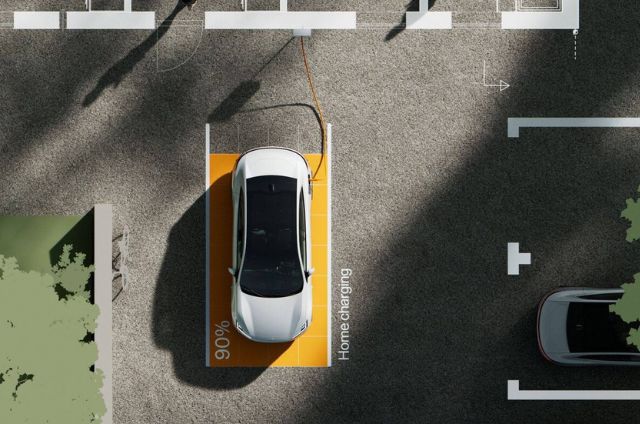
Since most EV charging happens at home, this update improves daily convenience while lowering total cost of ownership.
Lower Costs. Lower CO₂.
Smart charging doesn’t just save money. It also reduces emissions. Electricity prices often drop when renewable energy supply increases. Therefore, charging at the right time can lower the vehicle’s CO₂e footprint during its use phase.
Polestar Energy, including smart charging and solar integration, is available in 12 European markets. Grid rewards currently apply in Belgium, France, Germany, the Netherlands, Switzerland, and the UK.
The app is free to download in supported markets.
Polestar’s Bigger Picture
Polestar continues to expand its electric lineup, which includes Polestar 2, 3, 4, and the upcoming Polestar 5. Future models include the Polestar 6 roadster and Polestar 7 compact SUV, planned for European production.
At the same time, the brand pushes toward ambitious climate goals. Polestar aims to halve greenhouse gas emissions per vehicle by 2030 and reach climate neutrality across its value chain by 2040.
Smarter charging marks another step toward that future.