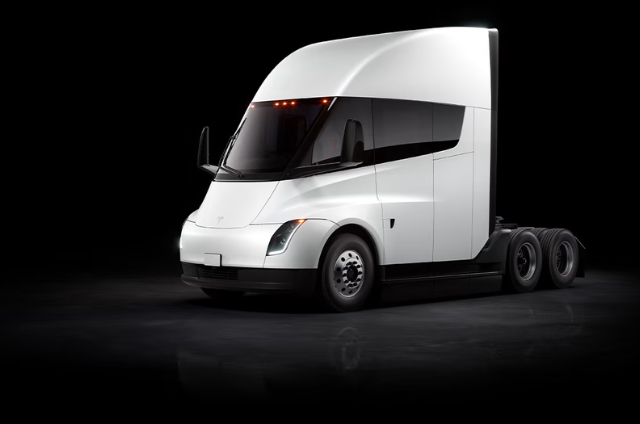
Tesla Reveals New Details About the Semi
Tesla just shared several new engineering insights about its long-awaited Tesla Semi electric truck.
During a detailed vehicle walkthrough with Jay Leno, Tesla Semi program lead Dan Priestley explained key improvements to the truck’s battery, powertrain, and efficiency.
The biggest claim quickly grabbed attention.
According to Tesla, the Semi’s battery pack is designed to last up to one million miles during normal commercial use. For fleet operators, battery longevity plays a crucial role in determining whether electric trucks can compete with diesel.
At the same time, Tesla continues preparing its dedicated Semi factory near Reno, Nevada, which aims to produce up to 50,000 trucks per year once fully ramped.
Weight Reduction Helps Match Diesel Payload
One of the biggest criticisms of electric trucks involves weight. Large battery packs can reduce cargo capacity.
Tesla says it solved that issue.
Engineers removed roughly 1,000 pounds from the truck compared with earlier prototypes. When combined with the 2,000-pound federal weight allowance for electric trucks, the 500-mile Tesla Semi can now match the payload capacity of diesel Class 8 trucks.
In real-world operations, some customers are already hauling 45,000-pound loads daily.
Tesla also improved aerodynamics. The company reduced drag by around 7%, bringing the truck’s drag coefficient to roughly 0.4.
Lower drag directly improves efficiency during long highway routes.
A Unique Dual-Axle Electric Powertrain
Instead of using a traditional transmission, Tesla designed a two-axle electric drive system.
The first axle focuses on torque and heavy acceleration. It handles steep hills and heavy loads.
However, once the truck reaches cruising speed, this axle disconnects completely. Then a second efficiency axle powers the truck during highway driving.
This setup improves both energy efficiency and performance, which are critical for long-haul trucking.
Interestingly, the Semi also shares key components with the Cybertruck, including battery cell technology, inverters, and a modern 48-volt electrical architecture.
Megawatt Charging Adds 300 Miles in 30 Minutes
Charging speed is another critical factor for electric freight.
Tesla says the Semi can charge at 1.2 megawatts using its Megacharger system. In ideal conditions, the truck can recover up to 300 miles of range in about 30 minutes.
Tesla has already opened its first public Megacharger site in Ontario, California and plans to deploy dozens more stations over the next few years.
Lower Operating Costs for Fleet Operators
Tesla also highlighted the Semi’s operating economics.
According to the company, energy costs in California are about 50% lower per mile compared with diesel trucks. Across the United States, Tesla estimates overall operating costs are roughly 20% cheaper per mile.
The Long Range Tesla Semi carries a price of about $290,000.
With battery durability, megawatt charging, and lower operating costs, Tesla believes the electric truck could finally challenge diesel’s dominance in long-haul freight.