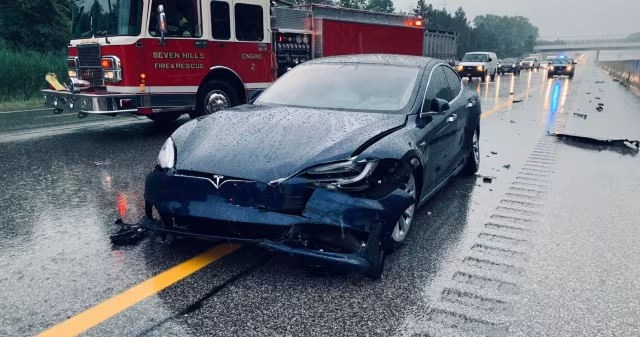
Electric vehicles are everywhere now, which brings up a natural question: If I’m in an accident in an EV, how is that crash different from one in a regular petrol car?
We all hope it never happens, but the truth is, EVs are built differently, and that changes a few key things about safety, repair, and what happens right after the crash. Let’s break down the distinctions you, the driver, should be aware of.
The High-Voltage Heart of the Car
Forget the old engine block; an EV’s power comes from a massive lithium-ion battery pack, often running between 300 to 800 volts. That sounds scary, but the car is designed to protect you:
- Quick Disconnect: In a serious crash, sensors instantly disconnect the battery, shutting down the high-voltage flow in milliseconds. It’s a built-in safety net.
- Armored Base: The battery sits low, in a heavily reinforced casing, protected by the car’s structure, which is designed with “crumple zones” to absorb impact around it.
These safety measures are why the high voltage is usually a non-issue for occupants and first responders after the initial impact.
Fire Risk: The Reality vs. The Headlines
When an EV fire happens, it gets major media attention. That’s because these lithium-ion battery fires are a different beast:
- They are chemistry-driven (called thermal runaway), meaning they can be incredibly hot.
- They need vast amounts of water to truly control and can even reignite hours later.
However, don’t let the headlines mislead you. Data shows that petrol cars actually catch fire more often overall. The real difference is how they burn. Petrol fires are fast, but EV fires require a different, more careful approach from firefighters. It’s a change in protocol, not necessarily a sign of greater danger.
How the EV is Built for Safety
The architecture of an EV actually gives it some significant safety advantages:
- Low and Stable: Since the battery sits flat in the floor, the car’s center of gravity is very low. This makes the EV incredibly stable, dramatically reducing the risk of a rollover in a dangerous maneuver.
- Solid Cage: With no big engine in the way, engineers build a super-rigid passenger compartment (the “safety cell”) that performs exceptionally well in crash tests.
In many ways, the unique EV structure makes it a remarkably safe car to be in.
The Weight Factor
EV batteries are heavy. This added mass affects the car in a few ways:
- More Momentum: In a collision, a heavier car carries more force, which can mean more damage for other, lighter vehicles.
- Braking Distance: The added weight can slightly increase braking distance, though the car’s regenerative braking helps to compensate for this.
The key takeaway is that the weight is placed low in the car, enhancing stability—a critical safety feature.
Repair Costs: Where Things Get Complicated
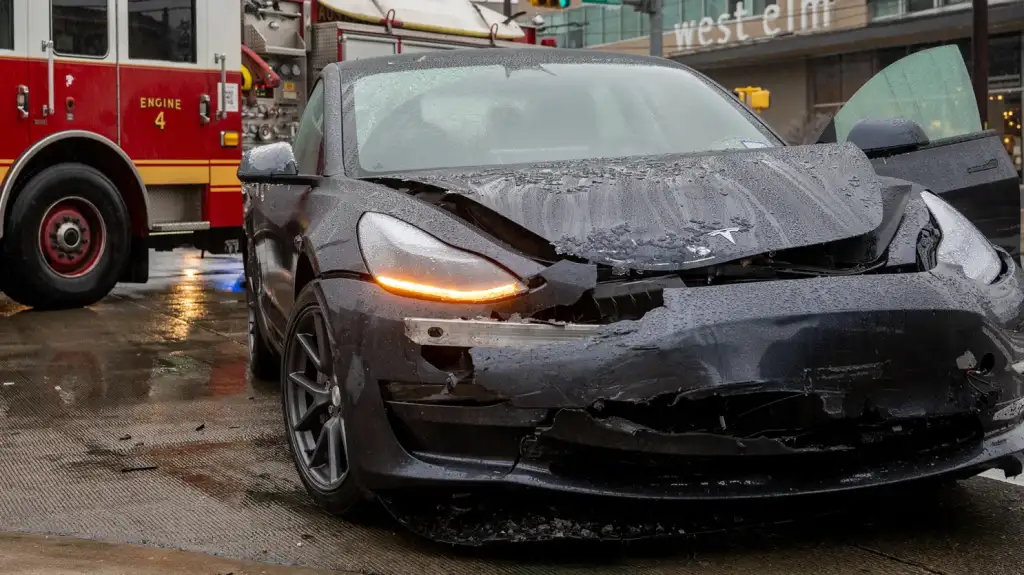
This is the most common headache for EV owners after a crash.
Even seemingly minor damage near the battery pack can lead to enormous costs. Why?
- Specialized Work: Fixing the battery system requires specialized diagnostics and technicians.
- High Replacement Cost: If the battery is damaged, replacing it is exceptionally expensive.
It’s becoming common for insurance companies to “write off” an EV as a total loss, even if the body damage looks minor, simply because the suspected battery repair cost is too high. If you’re buying a used EV, this is why a full car history report is essential—battery trauma isn’t always visible, but it impacts the car’s long-term value and safety.
Post-Accident Handling
After the tow truck arrives, the EV needs a different kind of care:
- Flatbed Only: EVs often require flatbed towing, not traditional hook-and-chain methods.
- Quarantine: Because a damaged battery can pose a delayed fire risk, recovery companies sometimes store the car in isolation (quarantine) as a precaution.
These are just different, careful risk management protocols for a new kind of vehicle.
The Bottom Line: Are EVs Safer?
It’s not a simple yes or no. The risks aren’t greater, they’re just different.
EVs shine in core safety: low rollover risk, excellent crash-test scores, and rigid cabins. The major differences are found after the collision: the complexity of repair, the high cost of the battery leading to more write-offs, and the need for specialist post-accident handling.
Understanding these structural and mechanical differences is the most important step for any driver or buyer in the growing electric world