FCC Approval Clears the Way
Tesla just crossed a major milestone.
The US Federal Communications Commission (FCC) granted the company a waiver to use ultra-wideband (UWB) radio technology. This approval allows Tesla to move forward with wireless inductive charging for its upcoming Cybercab.
In short, the regulatory roadblock is gone. That matters because the Cybercab aims to operate as a fully autonomous robotaxi. No pedals. No steering wheel. Therefore, automated charging is essential.
Built for a Driverless Future
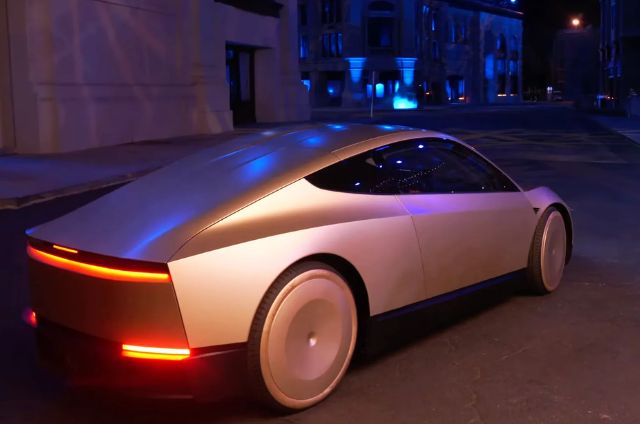
Tesla is preparing the Cybercab for series production. The first two-seater units have reportedly been built at the company’s Austin, Texas plant. The vision is clear. A robotaxi that drives itself and charges itself.
To achieve that, Tesla developed a static inductive charging system. It includes a charging pad embedded in the ground and a receiver mounted underneath the vehicle.
When the vehicle parks over the pad, electricity transfers wirelessly through magnetic coils. No cables. No human involvement.
Precision Is the Key
However, wireless charging requires perfect alignment. Even small positioning errors can reduce efficiency.
To solve this, Tesla uses a pulse-based UWB radio positioning system. A UWB transceiver inside the vehicle communicates directly with another unit in the ground charging station.
This peer-to-peer communication ensures precise alignment before charging begins.
According to official FCC documents, UWB signals activate briefly as the vehicle approaches the pad. They operate mainly at ground level. In addition, the vehicle body significantly reduces signal strength beyond the immediate charging area.
Initially, Tesla plans to rely on Bluetooth before fully deploying UWB technology.
Superchargers Still in the Picture
Wireless charging will not replace traditional options entirely.
Cybercab prototypes have frequently been seen charging at Tesla Supercharger stations across the United States. Therefore, conventional fast charging will likely remain part of the ecosystem.
Still, this FCC approval brings Tesla one step closer to a truly autonomous, self-charging robotaxi network.
And that could reshape urban mobility.