Big promises, different reality
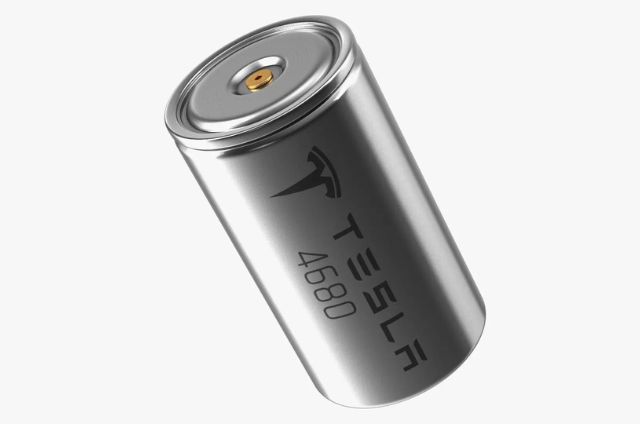
Five years after Tesla introduced its 4680 battery cell at Battery Day, the real-world results look far from the breakthrough that was advertised. The cell was originally pitched as a major leap forward, promising significantly higher energy, lower cost, and improved range at the pack level. Instead, production data shows Tesla’s in-house cells often underperform the supplier batteries they were meant to replace.
The 4680 was supposed to be a cornerstone of Tesla’s cost and performance advantage, especially for future mass-market vehicles. But instead of reshaping the industry, it has mostly been limited to a small number of applications like Cybertruck and select Model Y variants.
Lower energy density and reduced range
On paper, Tesla’s 4680 cells were expected to outperform existing formats. In practice, the opposite has been observed in several deployments. Current production 4680 cells show lower energy density than Panasonic’s 2170 cells used in similar vehicles.
That shortfall directly impacts vehicle performance. In Europe, the Model Y Premium Long Range RWD with 4680-based packs shows a noticeable reduction in usable capacity compared to versions using LG-supplied batteries. This translates into a real-world WLTP range drop of roughly 8% in otherwise identical configurations.
Weight savings, another expected advantage of the structural 4680 pack, have also been minimal in real-world testing, with only modest differences compared to older battery designs.
Charging performance remains a weak point
Fast charging performance has been one of the most criticized aspects of the 4680 program. Early production packs showed steep power drops during charging, with sustained high-speed charging lasting only a short portion of the curve.
In real-world testing, 10–80% charging times for 4680-equipped Model Y variants have been significantly slower than equivalent vehicles using supplier batteries. In some cases, even lower-cost LFP packs have demonstrated better charging efficiency over short time windows.
More recent European “8L” 4680 packs show some improvement in peak power, but still suffer from a rapidly tapering charging curve, limiting overall fast-charging performance.
Supply chain signals point to weak demand
The broader supply chain reflects the same trend. Contracts tied to 4680 production materials have been sharply reduced, with suppliers citing major cuts in expected volume. This suggests Tesla’s internal demand for the cells is far below original projections.
Production was initially expected to scale into a core pillar of Tesla’s EV lineup. Instead, usage appears limited and inconsistent, with supplier cells still powering many high-volume models.
European rollout raises concerns
In Europe, Tesla has quietly replaced supplier batteries with 4680 packs in certain Model Y trims, leading to reduced range figures compared to previously delivered versions. Some customers report receiving vehicles with lower specifications than those shown at the time of order.
The lack of clear communication about battery type has added to frustration, especially among buyers who expected consistent performance across identical trims.
Bigger picture
The 4680 program highlights a major gap between Tesla’s battery ambitions and current manufacturing reality. While the design remains central to Tesla’s long-term strategy, real-world performance shows it has not yet surpassed established supplier technologies in key areas like energy density and charging speed.
For now, Tesla’s battery advantage appears to still depend heavily on external suppliers rather than its in-house cell production.