A Wild Solar Comparison Goes Viral
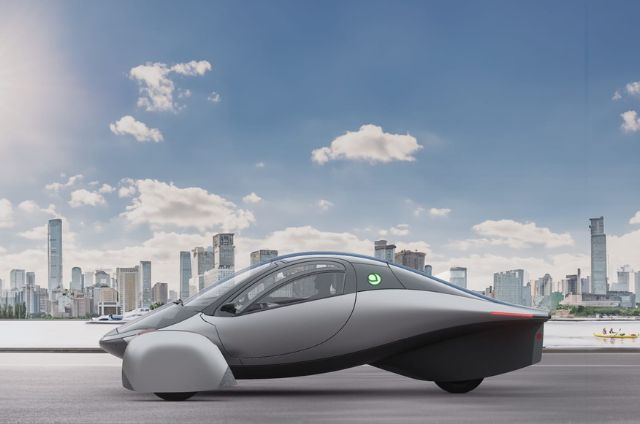
Aptera Motors just sparked attention with a simple but striking moment. The company’s co-CEO showed his solar electric vehicle producing more power from the sun than his home rooftop system.
At around 8 a.m., the house solar system generated about 136 watts. At the same time, the Aptera vehicle outside was producing over 300 watts — more than double.
Why the Car Won in the Morning Sun
This result might sound surprising, but it comes down to design. Rooftop solar panels are fixed in one position. They usually perform best at midday when sunlight hits them directly. Early in the morning, their angle is far from optimal.
The Aptera, however, is built differently. Its body is covered in curved solar panels placed across the hood, roof, and rear. That means at least some panels are always angled toward the sun. As a result, it can capture energy earlier in the day when fixed systems struggle.
The company says its full system can add up to 40 miles of range per day in ideal sunny conditions. That makes it one of the most aggressive solar EV concepts currently in development.
What This Means in Real Use
This does not mean the vehicle always outperforms home solar. Over a full day, rooftop systems still generate more total energy. However, the Aptera shows strong efficiency at low sun angles, which is where many systems fall short.
That difference is important for its core idea: a commuter car that can recharge itself during the day without always needing a plug.
Progress, Funding, and Pressure
The viral moment also comes during a critical period for Aptera. The company is still ramping up production and has yet to reach full-scale manufacturing. It recently completed early validation builds and continues expanding its production setup in California.
Financially, the company is still operating at a loss while it works toward scaling production and securing more funding.
Despite challenges, the concept remains one of the most unique in the EV space. A vehicle that can meaningfully harvest solar energy while parked could reduce charging needs dramatically for daily drivers.
The recent comparison highlights exactly why the idea continues to attract attention: it’s not just theory anymore — it’s physics in action.